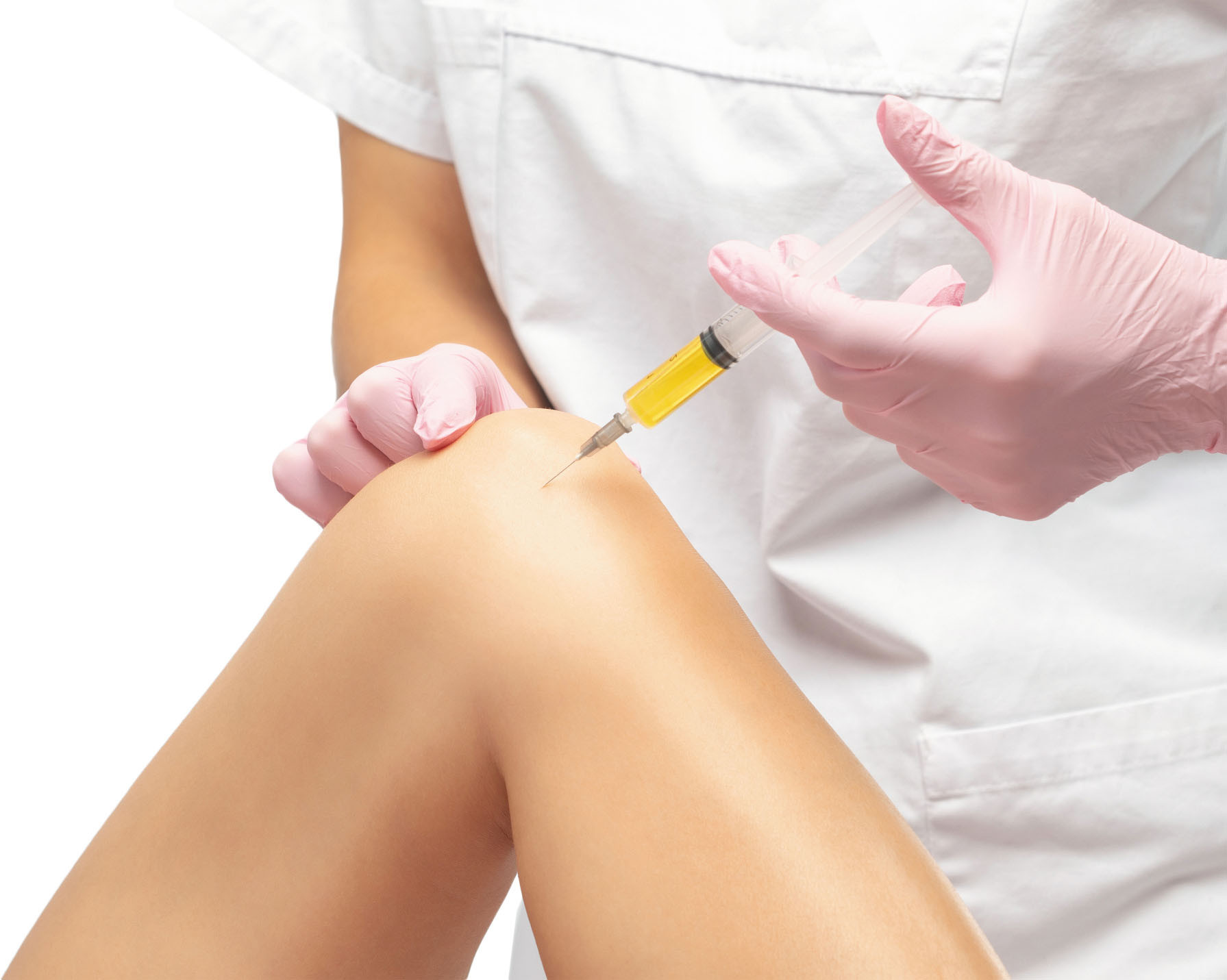
PRP Injections for Knees in Abu Dhabi
Knee pain is one of the most limiting physical conditions a person can face. Whether the cause is osteoarthritis, a sports injury, or chronic tendonitis, the impact on daily movement is immediate and significant. PRP injections for knees in Abu Dhabi offer a non-surgical, clinically supported approach to pain relief and tissue repair using the body's own healing mechanisms rather than masking symptoms with medication or pursuing premature surgery.
Quick Facts
| Treatment Type | Non-surgical, non-invasive injectable |
| Active Component | Platelet-rich plasma (derived from the patient's own blood) |
| Procedure Duration | 45 to 60 minutes |
| Downtime | Most patients return to light activity within 1 to 2 days |
| First Results | 4 to 6 weeks |
| Full Results | 3 to 6 months as tissue repair progresses |
| Results Duration | 6 to 18 months, depending on condition severity |
| Sessions Required | 1 to 3 sessions, depending on diagnosis |
| Anaesthesia | Local anaesthetic is applied at the injection site |
| Starting Cost | 3,000 AED per session |
What Are PRP Injections for Knees?
Platelet-rich plasma (PRP) therapy is a regenerative medical treatment that uses a concentrated preparation of the patient's own blood to stimulate tissue repair, reduce inflammation, and relieve pain within the knee joint.
Blood contains platelets, small cells that carry a high concentration of growth factors responsible for tissue healing and cellular regeneration. In PRP therapy, blood is drawn from the patient, processed to isolate and concentrate these platelets, and injected directly into the affected area of the knee. The concentrated growth factors accelerate the natural repair process in ways that the body cannot achieve on its own at the injury site.
Because PRP is derived entirely from the patient's own blood, the risk of allergic reaction or rejection is exceptionally low. It is not a foreign substance; it is a refined, amplified version of the body's existing healing capability.
How Does PRP Work?
The process relies on a piece of equipment called a centrifuge, and the science is straightforward:
Blood is composed of red blood cells, white blood cells, plasma, and platelets. When whole blood is placed in a centrifuge and spun at high speed, these components separate by density. The resulting upper layer platelet-rich plasma contains a platelet concentration between 5 and 10 times higher than normal blood.
When this concentrated PRP is injected into the knee joint or the surrounding soft tissue, the growth factors it carries initiate a targeted biological response:
- PDGF (Platelet-Derived Growth Factor) stimulates cell proliferation and tissue regeneration
- TGF-β (Transforming Growth Factor Beta) supports cartilage repair and reduces inflammatory activity
- VEGF (Vascular Endothelial Growth Factor) promotes the formation of new blood vessels to improve nutrient delivery to damaged tissue
- EGF (Epidermal Growth Factor) accelerates cellular repair and tissue remodelling
The combined effect is a reduction in inflammation, relief of pain, and measurable improvement in joint function over the weeks and months following treatment.
Conditions Treated with PRP Knee Injections
PRP knee injections are clinically indicated for a range of musculoskeletal conditions affecting the knee joint and surrounding structures:
| Condition | How PRP Helps |
|---|---|
| Osteoarthritis | Reduces joint inflammation, slows cartilage degradation, and improves mobility |
| Tendinopathy / Tendonitis | Stimulates tendon repair, reduces chronic tendon pain |
| Ligament Injuries (ACL / MCL) | Supports ligament healing and reduces recovery time |
| Meniscus Tears (partial) | Promotes tissue repair in the meniscal fibrocartilage |
| Bursitis | Reduces inflammation in the fluid-filled sacs surrounding the knee joint |
| Post-surgical Recovery | Accelerates tissue healing following knee procedures |
| Sports Injuries | Addresses soft tissue damage from acute or repetitive strain |
PRP is not a replacement for surgical intervention in cases of complete ligament rupture or severe structural damage. Your specialist will confirm during the consultation whether PRP is the appropriate course of treatment for your specific diagnosis.
PRP Injections in Other Areas
While this page focuses on knee treatment, PRP injections are applied across a range of other musculoskeletal and aesthetic concerns:
- Hip and shoulder joints for arthritis and rotator cuff injuries
- Elbow for lateral epicondylitis (tennis elbow) and golfer's elbow
- Ankle and foot for plantar fasciitis and Achilles tendinopathy
- Spine for facet joint pain and disc-related conditions
- Scalp for androgenic hair loss in both men and women
- Skin and face for collagen stimulation, fine lines, and post-acne scarring
Cost of PRP Injections for Knees in Abu Dhabi
The starting cost of PRP knee injections in Abu Dhabi is 3,000 AED per session. The total cost of your treatment plan depends on the number of sessions required, which is determined by the severity and nature of your condition.
| Treatment Plan | Estimated Cost |
|---|---|
| Single session | 3,100 AED |
| 3-session course | 9,300 AED |
Most patients with mild to moderate knee conditions benefit from a single session, while more advanced or chronic cases may require two to three sessions spaced 4 to 6 weeks apart. Your specialist will recommend the appropriate protocol at the consultation. All costs are confirmed before any treatment begins.
Who Is the Right Candidate?
PRP knee injections are suitable for adults experiencing knee pain or reduced function who meet the following criteria:
- You are experiencing knee pain from osteoarthritis, tendonitis, a sports injury, or a soft tissue condition
- Conservative treatments such as physiotherapy, anti-inflammatories, or cortisone injections have not provided adequate relief
- You want to avoid or delay surgical intervention
- You are in good general health with no active systemic infections
- You do not have a bleeding disorder or platelet dysfunction
- You are not taking anticoagulant medications that cannot be paused
- You are not pregnant or breastfeeding
- Your platelet count is within a normal range, confirmed by a pre-treatment blood test if required
PRP is not suitable if you have active cancer, sepsis, or an infection at or near the injection site.
How to Prepare for Your PRP Session
Preparation is straightforward. Following these steps will ensure the best possible concentration of platelets and reduce the risk of complications:
- Stay well-hydrated in the days leading up to your appointment. Hydration directly affects blood volume and platelet yield
- Maintain a balanced diet in the week before treatment; avoid skipping meals on the day of your session
- Avoid anti-inflammatory medications, including ibuprofen, aspirin, naproxen, and similar NSAIDs, for at least one week before treatment, as these reduce platelet function
- Discontinue systemic corticosteroids as directed by your specialist before treatment
- Avoid smoking and alcohol for at least 48 hours before your session
- Inform your specialist if you have a current infection, a low platelet count, an allergy to local anaesthetic, or are taking blood-thinning medications
What to Expect During Your Session
The full procedure takes between 45 and 60 minutes from start to finish. It is performed under local anaesthetic and is well-tolerated by most patients.
Consultation and Assessment
Your specialist reviews your diagnosis, imaging results (if available), and medical history. The injection site and treatment protocol are confirmed at this stage.
Blood Draw
A small volume of blood, typically 15 to 60ml, is drawn from a vein in your arm using a standard venepuncture technique. The volume collected is determined by the number of injection sites and the concentration required.
Centrifugation
The collected blood is placed in a medical-grade centrifuge and spun at high speed for approximately 10 to 15 minutes. This separates the blood into its components and isolates the platelet-rich plasma layer, which is then extracted into a sterile syringe for injection.
Preparation of the Injection Site
The knee is cleaned with an antibacterial solution. A local anaesthetic is administered to the injection site to ensure the procedure is as comfortable as possible.
PRP Injection
The concentrated PRP is injected precisely into the knee joint space or the targeted soft tissue structure using a fine needle. Ultrasound guidance may be used to ensure accurate placement, particularly for intra-articular injections.
Post-Injection Review
Following the injection, the area is cleaned, and a brief observation period is observed before you leave the clinic. You will receive full written aftercare instructions before your appointment ends.
Aftercare and Recovery
Recovery from PRP knee injections is minimal, though the following guidelines apply in the days after treatment:
- Avoid anti-inflammatory medications, including ibuprofen and aspirin, for at least 48 hours after treatment, as they can counteract the inflammatory response that PRP relies on to initiate healing
- Refrain from smoking and alcohol for at least 48 hours post-treatment
- Avoid strenuous physical activity, heavy lifting, and high-impact exercise for 48 to 72 hours
- Light walking is encouraged from day one to maintain joint circulation
- Some localised pain, swelling, and stiffness in the knee are normal in the first 3 to 5 days. This is a sign that the healing response is active
- Apply an ice pack wrapped in a cloth to the area if discomfort is significant; do not apply heat
- Contact your clinic if pain is severe, escalating, or accompanied by fever
Most patients return to light daily activities within 1 to 2 days and resume normal physical activity within 1 to 2 weeks, guided by their specialist.
Results: What to Expect
PRP works through a biological process; results are not immediate and develop progressively over weeks and months as tissue repair takes place.
| Timeframe | What to Expect |
|---|---|
| Days 1 – 5 | Localised soreness and mild swelling at the injection site, the healing response is active |
| Week 1 – 2 | Initial discomfort resolves; no significant functional change yet |
| Week 4 – 6 | First signs of pain reduction and improved mobility |
| Month 2 – 3 | Progressive improvement in joint comfort and function |
| Month 3 – 6 | The full extent of results is reached as tissue repair completes |
| Month 6 – 18 | Results are maintained; duration varies by condition severity and lifestyle |
Clinical studies report meaningful pain reduction and functional improvement in 70 to 80% of patients treated with PRP for knee osteoarthritis. Results are not permanent a maintenance session may be recommended at 12 to 18 months, depending on how the joint responds.
Benefits of PRP Knee Injections
- Non-surgical and non-invasive, no incisions, no general anaesthesia, no hospital admission
- Uses the patient's own blood, with no risk of allergic reaction or rejection
- Targets the biological cause of pain and degeneration, not just the symptoms
- Reduces inflammation and supports cartilage preservation in arthritic joints
- Promotes genuine tissue repair rather than masking pain temporarily
- Can delay or reduce the need for surgical intervention
- Minimal downtime, most patients return to light activity within 48 hours
- Suitable for a wide range of knee conditions in a single treatment approach
- Can be repeated safely if a follow-up session is needed
Why Choose Us for PRP Knee Injections in Abu Dhabi?
Precision matters in PRP treatment. The platelet concentration, injection technique, and accuracy of placement directly affect outcomes. Our clinic delivers PRP with clinical rigour and a patient-specific approach.
- Specialist practitioners with targeted experience in musculoskeletal PRP treatment
- Ultrasound-guided injection technique available for accurate intra-articular placement
- Personalised treatment plans, session count and protocol are determined by your diagnosis, not a standard package
- Medical-grade centrifuge equipment to ensure optimal platelet concentration
- Transparent pricing is confirmed before any treatment begins
- Full aftercare guidance and follow-up access included
Book Your Consultation in Abu Dhabi
If knee pain is limiting your movement or affecting your quality of life, a consultation is the right first step. Your specialist will review your diagnosis, assess your suitability for PRP, and build a treatment plan matched to your condition.
Book online, call us directly, or visit our clinic in Abu Dhabi to get started.